Biohazard Cleanup
Biohazard contamination involves biological or chemical agents that require specialized handling, decontamination, and disposal under regulatory protocols. Materials that are not properly addressed may pose health risks and result in regulatory non-compliance.
Regulatory compliance documentation is maintained throughout the decontamination process.
This information is general in nature. A site inspection is required to determine scope and conditions. See our Restoration Disclaimer.
How We Resolve It
Assessment & Safety Protocol
Risk classification and safety planning including PPE requirements, containment strategy, and regulatory compliance.
Containment
Establishment of controlled zones with appropriate barriers, signage, and access restrictions.
Decontamination
Application of hospital-grade disinfectants and specialized cleaning agents to eliminate biological hazards.
Verification & Clearance
Post-cleaning testing and documentation to verify decontamination meets required safety thresholds.
Disposal & Reporting
Compliant disposal of contaminated materials with full chain-of-custody documentation and regulatory reporting.
What Happens During Biohazard Decontamination
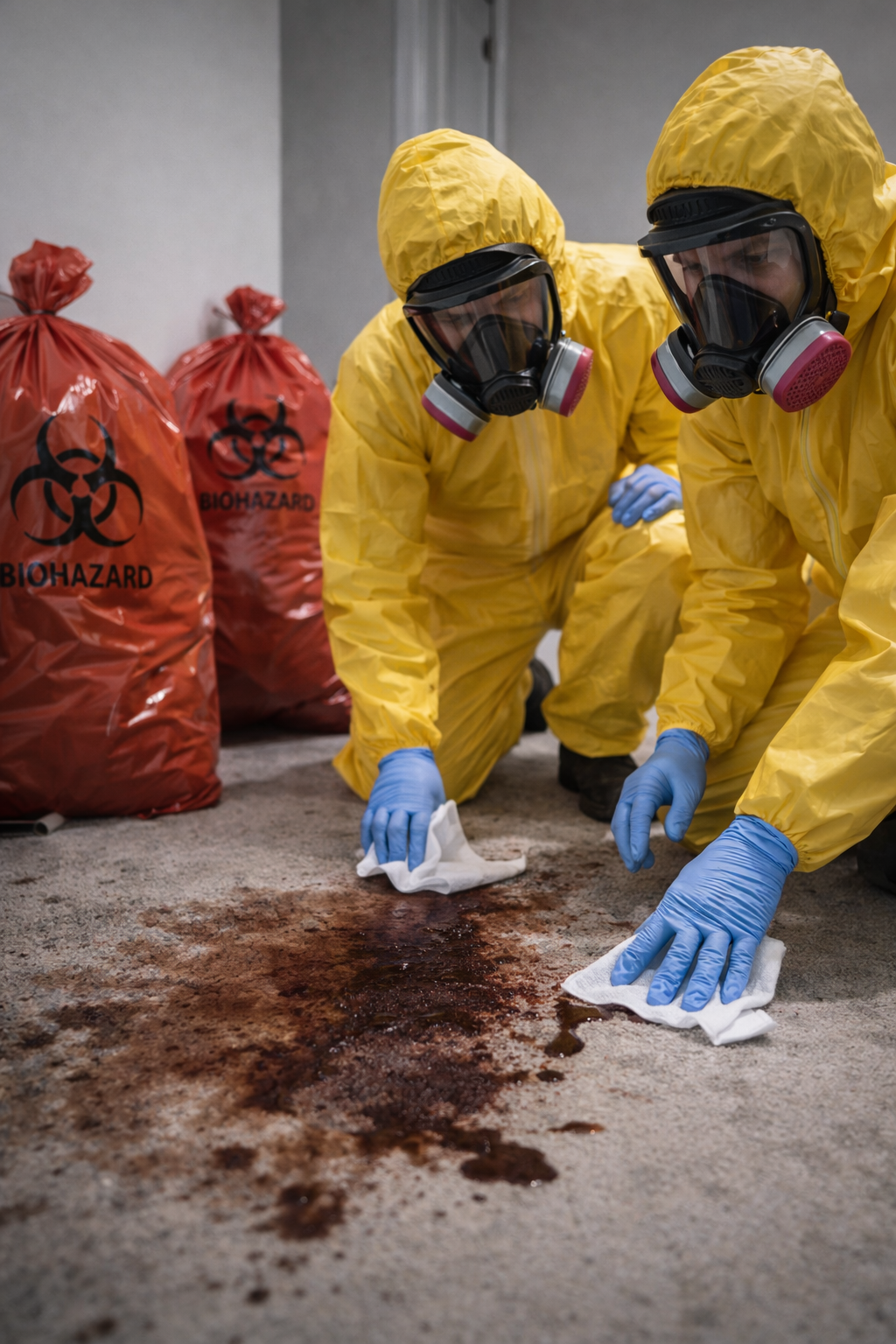
Biohazard decontamination follows a strict protocol beginning with containment of the affected area, followed by removal of contaminated materials, application of hospital-grade disinfectants, and post-cleaning verification. All work is performed by trained technicians using appropriate personal protective equipment and compliant disposal methods. In residential property recovery scenarios, biohazard decontamination is coordinated with the broader recovery process to ensure the property can be safely returned to its pre-incident condition.
How Regulatory Compliance Is Maintained During Cleanup
Biohazard cleanup is subject to federal, state, and local regulations governing the handling, transport, and disposal of contaminated materials. Chain-of-custody documentation is maintained for all materials removed from the property, and regulatory reporting is completed as required by applicable standards.
When Structural Remediation Follows Biohazard Cleanup
If biohazard contamination has affected structural materials such as subflooring, drywall, or framing, those materials may require removal and replacement after decontamination. This structural remediation is coordinated as part of the same project, with reconstruction restoring the property to its pre-incident condition.
Frequently Asked Questions
What regulatory standards apply to biohazard cleanup?
Biohazard cleanup must comply with OSHA bloodborne pathogen standards, EPA regulations for contaminated waste disposal, and applicable state and local health department requirements. All disposal is performed through licensed waste management facilities with documented chain of custody.
Can the property be occupied during decontamination?
The affected area is isolated with containment barriers and access restrictions during decontamination. Whether the rest of the property can be occupied depends on the type and extent of contamination. In cases involving airborne biological agents, full property evacuation may be required until clearance testing is complete.
What happens if additional contamination is discovered?
If testing or inspection during the cleanup process reveals contamination beyond the initial scope, the affected areas are documented, containment is expanded, and the scope is updated. Insurance coordination is adjusted to reflect the expanded scope before additional decontamination work proceeds.
How does biohazard cleanup work in a home?
Biohazard cleanup begins with a safety assessment and establishment of containment zones. Contaminated materials are removed following strict protocols. The affected area is then disinfected, deodorized, and verified clean through testing. All waste is disposed of according to regulatory requirements. Documentation is maintained throughout for insurance coordination and compliance verification.
If your property has been affected, starting the case early protects the recovery process. We coordinate mitigation, contents handling, and reconstruction as needed. You'll receive a case folio immediately. Related services: Water Damage Recovery, Reconstruction.