Fire and Smoke Damage
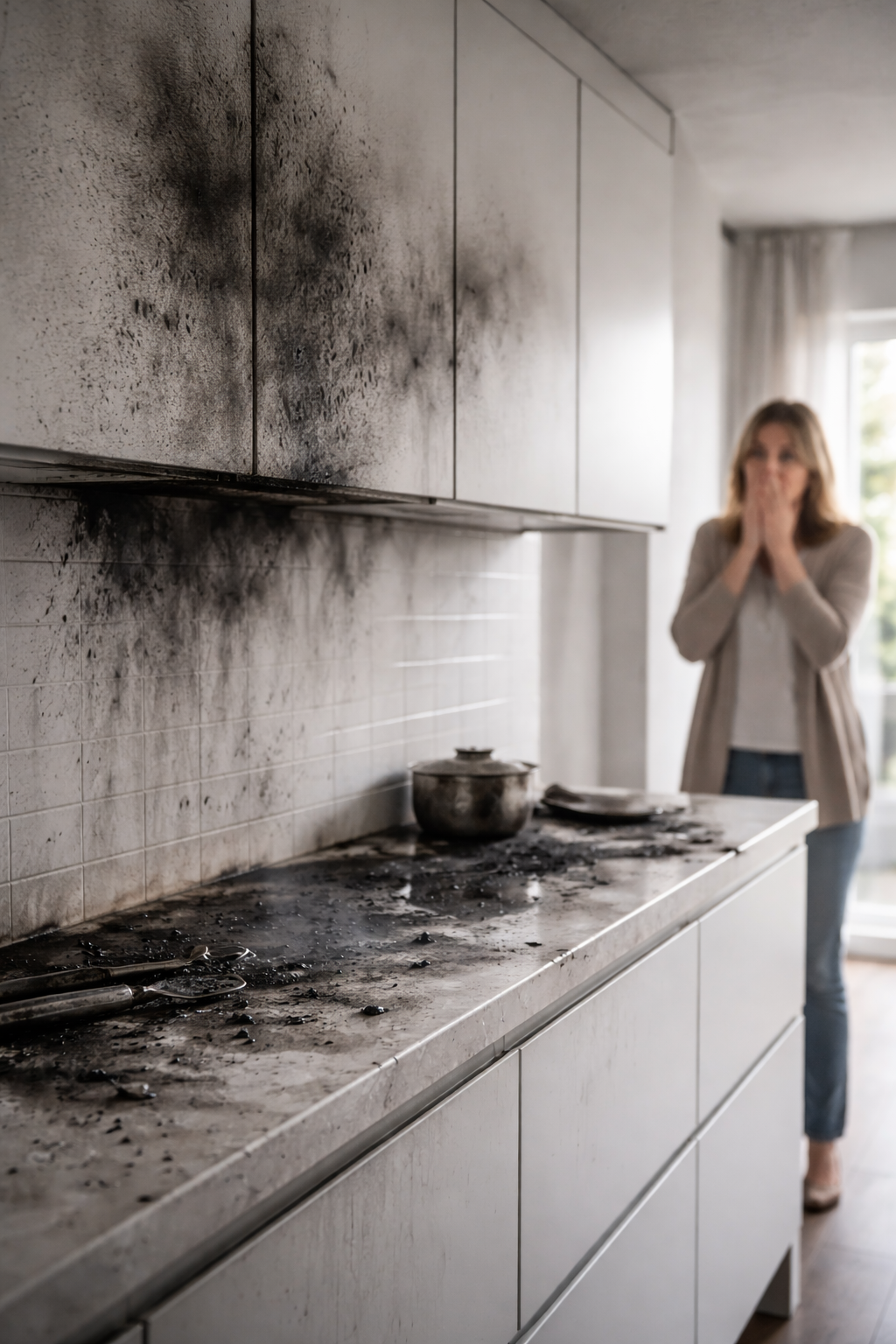
Fire events cause structural compromise, soot deposits, and smoke infiltration throughout affected areas. Soot and smoke residue penetrate building materials progressively, making removal more difficult over time. Stabilization and documentation should begin promptly to preserve the structure and support the recovery process.
Damage can extend if the property is not stabilized. Structured documentation from the start supports coordination with insurance carriers.
This information is general in nature. A site inspection is required to determine scope and conditions. See our Restoration Disclaimer.
How We Resolve It
Inspection & Assessment
Evaluation of structural integrity, smoke penetration patterns, and content salvageability.
Board-Up & Stabilization
Securing the property against weather and unauthorized access while stabilizing compromised structural elements.
Soot & Smoke Removal
Specialized cleaning techniques to remove combustion residue from surfaces, systems, and contents.
Odor Elimination
Thermal fogging, ozone treatment, and hydroxyl generation to neutralize smoke odor at the molecular level.
Structural Restoration
Complete rebuilding of fire-damaged areas including framing, electrical, plumbing, and finish work.
What Happens After Fire and Smoke Damage Mitigation
After the property is stabilized and soot and smoke residue are removed, the structural damage is assessed to determine reconstruction requirements. Smoke odor elimination continues in parallel with planning for structural repairs, ensuring the property is both clean and structurally sound before reconstruction begins. Properties requiring coordinated reconstruction across multiple trades — including framing, electrical, plumbing, and finish work — benefit from a unified project structure that maintains documentation continuity throughout.
How Contents Are Protected During Fire Restoration
Fire-affected contents require specialized cleaning to remove soot, smoke residue, and odor. Items that can be salvaged are documented and either cleaned on-site or transferred to a processing facility through a coordinated pack-out. Non-salvageable items are documented for insurance purposes.
How Reconstruction Follows Fire Damage Mitigation
Reconstruction after fire damage addresses structural framing, electrical and plumbing systems, and finish work. This phase is planned during mitigation so that the transition is seamless. Documentation from the mitigation phase carries forward into reconstruction to maintain insurance coordination continuity.
What Happens After Fire Damage Cleanup?
After soot removal, odor treatment, and structural cleaning are complete, the focus shifts to reconstruction of damaged areas. This includes replacing compromised structural materials, restoring finishes, and addressing smoke penetration in concealed spaces. The documentation from cleanup carries directly into the reconstruction scope, maintaining continuity with the insurance claim.
Frequently Asked Questions
How is smoke odor fully eliminated?
Smoke odor elimination uses a combination of thermal fogging, ozone treatment, and hydroxyl generation to neutralize odor molecules embedded in building materials. The process is applied after soot removal and may require multiple treatments depending on the severity of smoke penetration.
Should contents be cleaned on-site or removed?
The decision depends on the extent of contamination and the type of restoration work required. If structural reconstruction is needed, contents are typically removed through a pack-out process to protect them from construction activity. Items with light soot exposure may be cleaned on-site if the area is not undergoing reconstruction.
Who manages reconstruction after fire mitigation?
Reconstruction is managed as a continuation of the same recovery project. The team that performed mitigation coordinates directly with the reconstruction team to ensure documentation continuity and alignment with insurance requirements throughout the entire process.
If your property has been affected, starting the case early protects the recovery process. We coordinate mitigation, contents handling, and reconstruction as needed. You'll receive a case folio immediately. Related services: Pack-Out Services, Reconstruction.