Mold
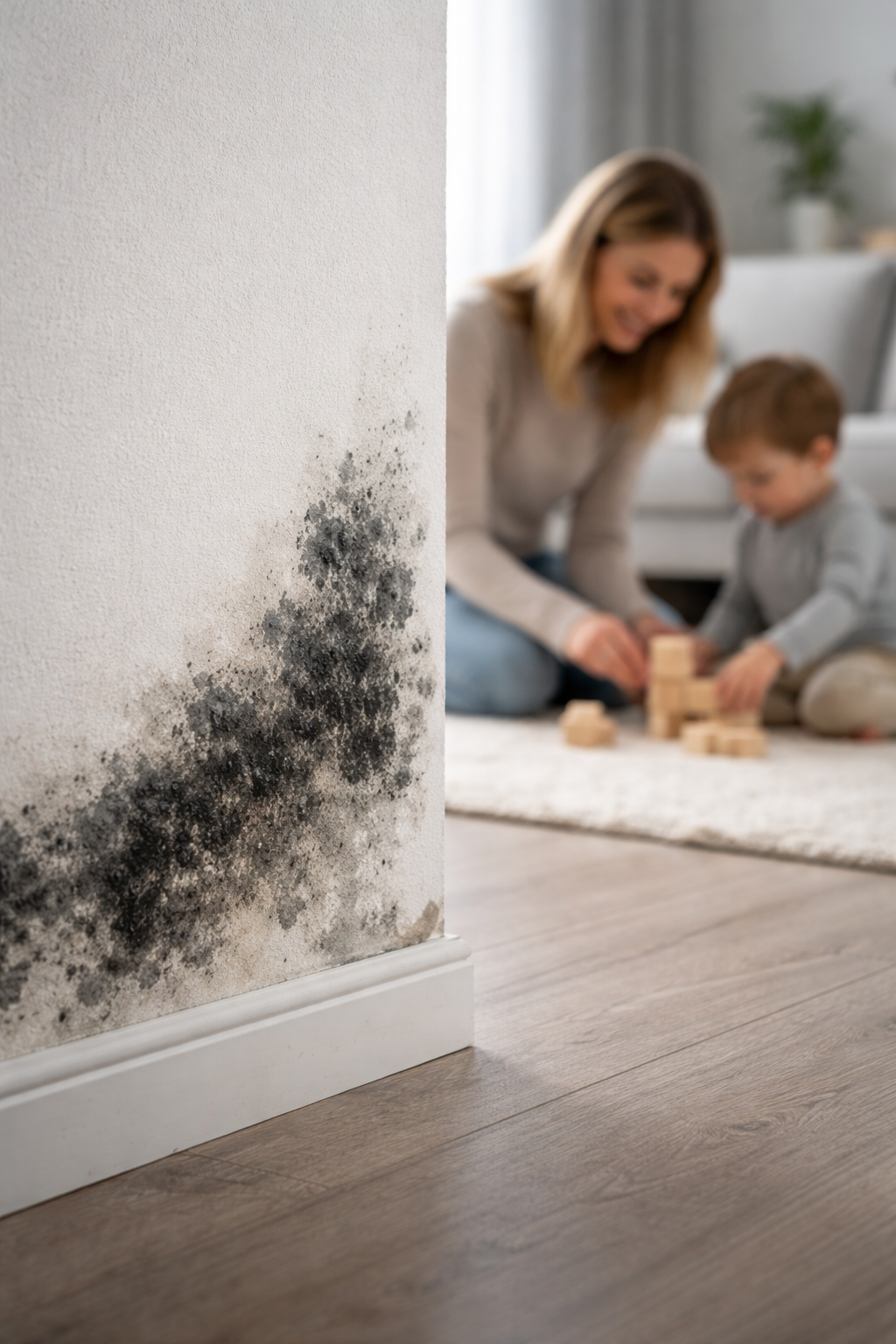
Mold develops on building materials exposed to persistent moisture. Left unaddressed, it spreads to adjacent materials and can compromise indoor air quality. Early assessment allows containment before conditions escalate.
Early documentation supports both the containment strategy and the insurance coordination process.
This information is general in nature. A site inspection is required to determine scope and conditions. See our Restoration Disclaimer.
How We Resolve It
Inspection & Assessment
Comprehensive visual and instrument-based inspection to identify mold presence, moisture sources, and affected materials.
Containment
Isolation of affected areas using physical barriers and negative air pressure to prevent cross-contamination.
Remediation
Removal and treatment of contaminated materials following industry-standard remediation protocols.
Cleaning & Decontamination
HEPA vacuuming, antimicrobial treatment, and air scrubbing to eliminate residual spores and contaminants.
Structural Restoration
Repair or replacement of affected structural components to restore the property to pre-loss condition.
What Happens After Mold Remediation Is Complete
After mold-contaminated materials are removed and the affected area is decontaminated, post-remediation verification confirms that airborne spore counts have returned to acceptable levels. If structural materials were removed during remediation, the project transitions into reconstruction to restore walls, flooring, and other affected building components. Properties with persistent humidity exposure or complex building envelopes are particularly susceptible to mold conditions, since these envelopes that can trap moisture within wall cavities and subfloor systems.
How Contents Are Handled During Mold Remediation
Contents in or near affected areas may be exposed to mold spores and require professional cleaning or removal. Items that cannot remain safely on-site during remediation are inventoried and transferred to climate-controlled storage through a coordinated pack-out process until the property is cleared for re-occupancy.
When Reconstruction Is Necessary After Mold Damage
Mold remediation often requires removal of drywall, insulation, flooring, and other building materials. Once clearance testing confirms successful remediation, reconstruction replaces these materials to return the property to its pre-loss condition. This work is coordinated as part of the same recovery project.
Frequently Asked Questions
How long does mold remediation take?
The duration depends on the size of the affected area, the type of materials involved, and whether structural components require removal. A typical residential remediation project takes between three and seven business days, not including reconstruction if structural repairs are needed.
Can I stay in the property during remediation?
In many cases, containment barriers allow occupants to remain in unaffected areas of the property. However, if the contamination is extensive or involves HVAC systems, temporary relocation may be recommended to ensure safety during the remediation process.
What happens if mold returns after treatment?
Mold recurrence typically indicates an unresolved moisture source. If mold returns after remediation, the moisture source is re-evaluated and addressed before additional remediation is performed. Proper water damage mitigation is essential to preventing recurrence.
If your property has been affected, starting the case early protects the recovery process. We coordinate mitigation, contents handling, and reconstruction as needed. You'll receive a case folio immediately. Related services: Pack-Out Services, Reconstruction.